Real encounters.Real scores.Real evidence.
Tutors and lecturers get the grading done: no transcribing, no hand-scoring. Record any conversation, and it’s scored against your rubric and linked to your programme outcomes. Tutors and lecturers review every result and make the final call. Students get feedback in under a minute, marks go to your LMS, and every recording becomes evidence for your Nursing Council programme approval and monitoring.
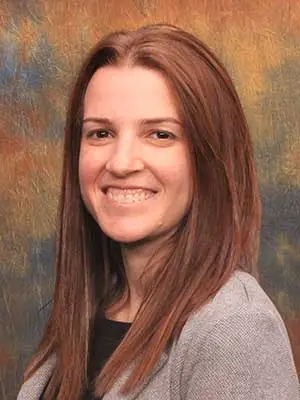
“Built by an educator, for educators.”
I spent more than a decade in the emergency department at Long Island Jewish Medical Center, with patients in psychiatric crisis. Then I started teaching, and spent years crosswalking assignments to competency frameworks by hand and rebuilding the evidence for every accreditation review. So I built the tool I needed.
Competency-based nursing needs evidence, and today it runs on observation.
Observation is subjective.
Two tutors and lecturers can watch the same student and score them differently. A rubric helps, but it gets applied from memory, in a hurry, to whatever the observer happened to see.
Observation is slow.
Watching an encounter or skill, transcribing it, scoring it against the rubric and writing feedback takes hours per student. Across a cohort, something gives: fewer encounters get assessed, or the feedback gets thinner.
Programme monitoring needs evidence.
The competence is in your programme documents. The proof that students met it on placement and in simulation isn't anywhere you can point to.
Record. Score. Link.
Record
Students record on their phone or any device. Tutors and lecturers can upload existing audio recordings, and can listen to the recording behind every score.
Web · iOS · AndroidScore
The recording is transcribed, student and speaker voices are separated, and it’s scored against your rubric in under a minute. Tutors and lecturers then review every score.
Speaker separation built inLink
Each score is linked to your rubric criteria, your programme outcomes and your paper outcomes, and it adds up to a cohort report you can export as PDF or CSV for your Nursing Council programme approval and monitoring.
PDF and CSV exportThe questions we hear most.
Tutors and lecturers stay in charge
You review every score. Adjust any of them, and the change is logged. Use our rubric, or write your own and have it scored instead. The scoring does the first pass, and tutors and lecturers make the call.
Feedback students can use
Every student gets a one-page report with what they said, what worked, and what to try instead. It arrives in under a minute, while the encounter is still fresh.
Works with your LMS
Moodle, Canvas, Blackboard, Brightspace and Schoology. Import a paper and its class list, add NurseKind assignments from inside your LMS, and send marks to your LMS.
Practise before it counts
Students can practise with a voiced patient before they ever record for a grade. Assign a scenario before clinical placements, or put one on the classroom screen: one student talks, the class watches, and you lead the debrief. Practice is formative. It doesn’t go in the record.
One system for the skills that are hardest to measure
Assess: record any conversation
Any recorded conversation, in the lab, in simulation, in class assignments, peer-to-peer, or on clinical placements, transcribed with speaker separation and scored against your rubric. This is where the evidence comes from. Already have the recording? Upload the audio and it's graded the same way.
Practice: AI patients
Live voice conversations with AI patients that respond to what the student actually says. No script, no decision tree. Start from the built-in library, or write your own scenarios with your own drug names, units and care pathways. Every session is graded against a nursing rubric in under 60 seconds. Formative practice, anytime, anywhere.
Your rubric, your standard
Write your rubric, or upload the one you already use, and assign it to a paper. Every encounter is scored against it, with the evidence kept per student.
Syllabus outcomes map
Upload your syllabus. NurseKind AI reads the paper outcomes it lists, you confirm them, and you link each assignment to the outcomes it evidences. It maps your plan. The evidence of what students did comes from scored encounters.
Programme-wide analytics
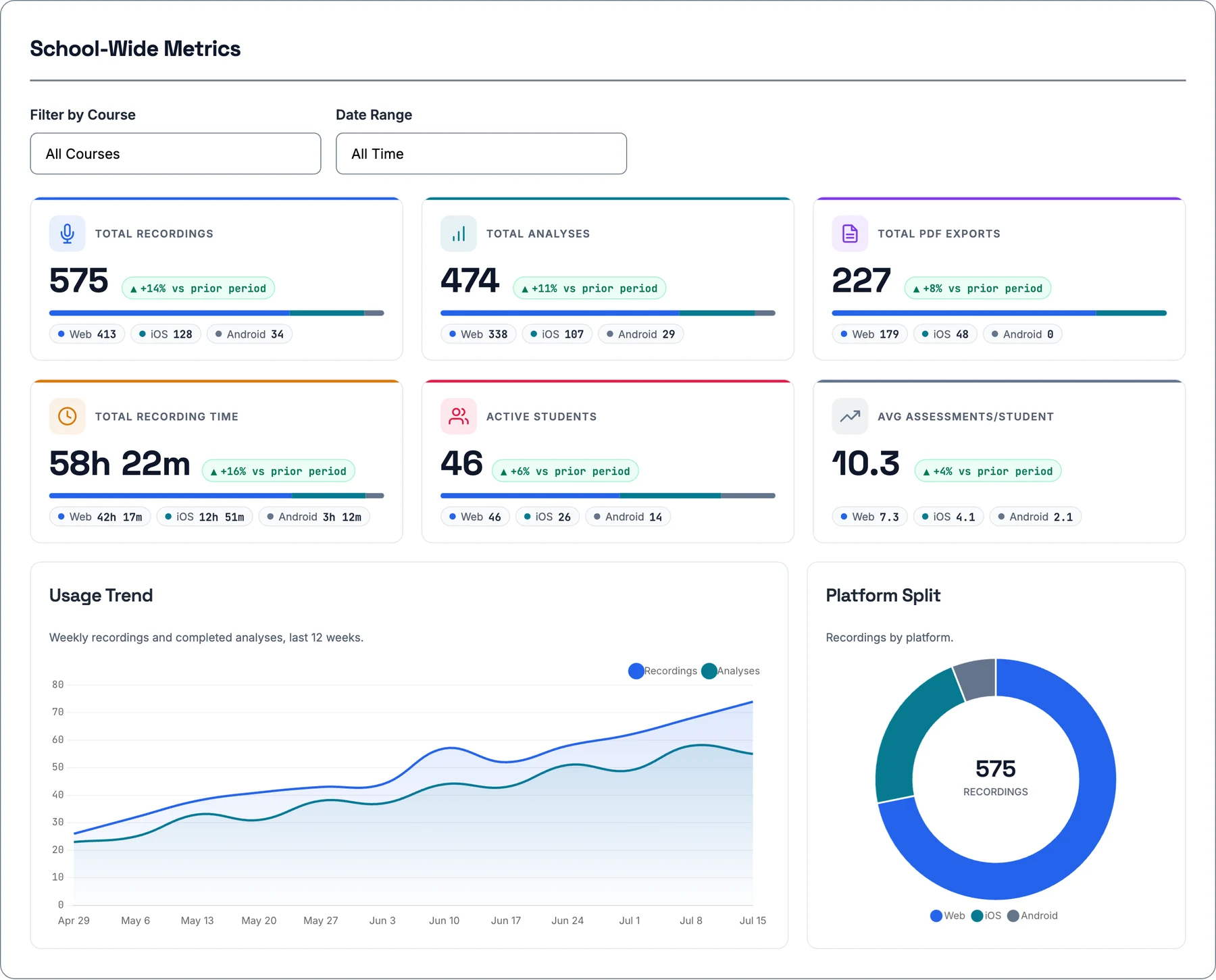
Track adoption, engagement, and outcomes across your whole programme. Spot at-risk students early.
Group scenario assessment
Teams recorded together and transcribed as individual speakers on one scenario, graded as a single shared score instead of one student at a time.
Evidence for Nursing Council approval and monitoring.
The Nursing Council of New Zealand accredits and monitors nursing programmes, and sets the competencies for the registered nurse scope of practice, which include cultural safety. NurseKind AI gives your team a scored, timestamped record of how students communicate, on placement or in simulation. Nursing Council: approving and monitoring programmes →
Your rubric, your words
Write your rubric, or upload an existing one, in the wording of the Nursing Council competencies for the registered nurse scope. Every encounter is scored against it. The built-in rubric was written for US programmes, so a programme here should expect to bring its own.
A record that builds as you teach
Each scored encounter is timestamped, tied to the student, and added to the cohort report, instead of being compiled by hand before your Nursing Council programme approval and monitoring.
Tutors and lecturers stay the assessor
Tutors and lecturers review every score and can adjust it with a reason on the record. The original AI score is always kept.
Export when you need it
A cohort evidence report as PDF or CSV, including the programme and paper outcomes your assignments were linked to. Practice sessions stay separate from the evidence record.
Where your data goes, stated plainly
NurseKind AI is a US company and a US service. Here is what your IT and privacy team will ask for, up front.
Processed in the United States
Recordings, transcripts and scores are stored and processed on Google Cloud in the United States. Our subprocessors page lists every vendor and where it processes data.
Documentation for your review
For the Privacy Act 2020 and the Health Information Privacy Code, we provide a Data Processing Agreement, security documentation and a data access, correction and deletion process on request, to support your privacy impact assessment. Your institution stays responsible for its students' personal information.
Encrypted end to end
All recordings and transcripts are encrypted in transit and at rest, with role-based access controls and audit logging.
Your data, your rules
Institutions own their data. Clear retention policies, MFA for tutors and lecturers and admins, and students can see and download their own records.
Start with a pilot. Scale with your programme.
We usually begin with one cohort. Book a demo and we will talk through scope, set-up with your LMS, and a quote for your programme.
Book a demo →What heads of school and programme leaders ask us
Watch a real encounter become an evidence record
See a live assessment run on a real interaction, scored against a rubric, and bring your own if you'd like.
20 minutes · see your own rubric scored live · times in New Zealand time (Auckland)